Western astrology divides the sky into twelve signs. Vedic astrology uses twelve too, but underneath them lies an older and finer division: the 27 nakshatras, the lunar mansions. If you ask a family in India for a child's star, this is what they will tell you.
Where they come from
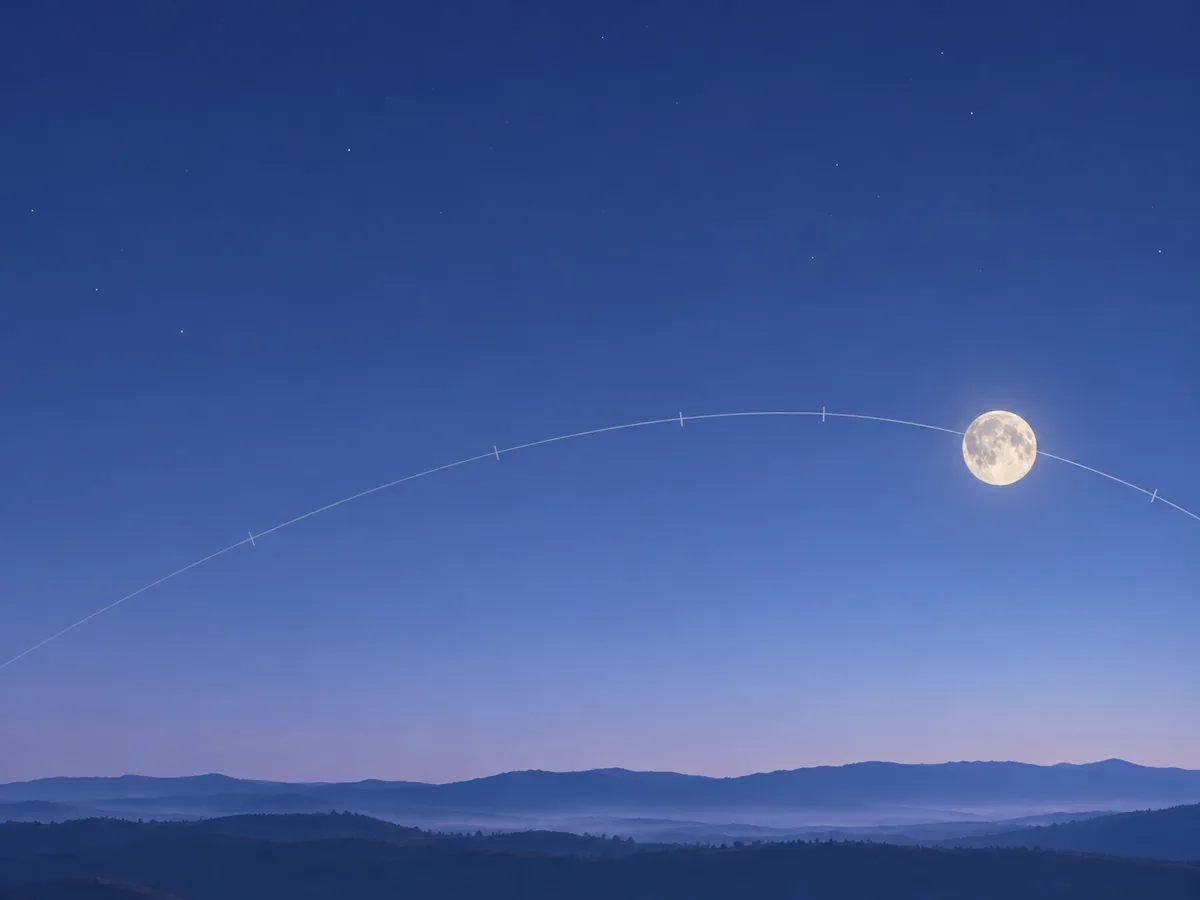
The Moon takes about 27.3 days to circle the zodiac against the background stars. Ancient sky-watchers marked its nightly resting places by the star groups nearby, and these became the nakshatras. The Vedic texts list them and name a deity for each, and they are much older than the twelve signs in Indian tradition. In the Puranic telling, the nakshatras are the 27 daughters of Daksha, married to the Moon, who spends one night with each.
Each nakshatra is 13°20′ of the zodiac. Twenty-seven of them make the full 360°. Each is divided into four padas, or quarters, of 3°20′. Nine padas fit exactly into each 30° sign, so the two systems lock together neatly: every sign holds two and a quarter nakshatras.
What each one carries
A nakshatra is more than a stretch of sky. Each has:
- A ruling planet, in the repeating order Ketu, Venus, Sun, Moon, Mars, Rahu, Jupiter, Saturn, Mercury.
- A presiding deity, such as Agni for Krittika or Vishnu for Shravana.
- A symbol, like Ashwini's horse's head or Hasta's open hand.
- A gana or temperament: Deva (divine), Manushya (human) or Rakshasa (fierce).
- A shakti, a particular power, such as Rohini's power to make things grow.
- A nature used in choosing muhurats: light, soft, fixed, movable, fierce, sharp or mixed.
Together these describe a quality with surprising precision. Rohini, ruled by the Moon with Prajapati as its deity, is fertile, attractive and fond of comfort. Ardra, ruled by Rahu with Rudra as its deity, is stormy, searching and renewing. Both can be in a perfectly good chart; they simply feel different.
Deva, Manushya, Rakshasa
The three ganas are often misunderstood. Rakshasa does not mean a person is wicked, any more than Deva means they are a saint. The ganas describe temperament: Deva nakshatras tend to be gentle and refined, Manushya nakshatras practical and human in their wants, Rakshasa nakshatras intense, independent and protective of their own. The ganas matter mainly in marriage matching, where two very different temperaments are asked to understand each other, and even there they are one factor among several.
Your birth nakshatra
Your janma nakshatra is the one the Moon occupied when you were born. Because the Moon represents the mind, it is often a more personal description than your Moon sign alone. It is used in several important ways:
- It sets the start of your Vimshottari dasha sequence. Born in a Venus-ruled nakshatra, you begin life in a Venus period.
- Its pada gives the traditional first syllable for a child's name.
- It is central to marriage matching between two charts.
- Each day's nakshatra is read in relation to it.
Today's nakshatra
The Moon moves through roughly one nakshatra a day, so every day has a star. This is one of the five limbs of the panchang, and it is why certain days are chosen for certain things. Pushya is sought for purchases and new starts; Rohini and the Uttaras for foundations and marriage; Ashwini and Hasta for quick, practical beginnings. RitamSage reads today's nakshatra as one of the inputs to your daily rhythm, and the Muhurat Finder uses it to find good windows.
Padas and the navamsa
Each pada of each nakshatra falls in a sign of the navamsa, the ninth-division chart that astrologers use to read marriage and the inner strength of planets. The padas run through the signs in order, starting from Aries with the first pada of Ashwini. So the four padas of Ashwini fall in Aries, Taurus, Gemini and Cancer navamsa; Bharani's in Leo to Scorpio; Krittika's in Sagittarius to Pisces; and the cycle starts again with Rohini. This is why two people with the Moon in the same nakshatra can still feel different.
You can read about each of the 27 in its own page, and see your own in Your star.