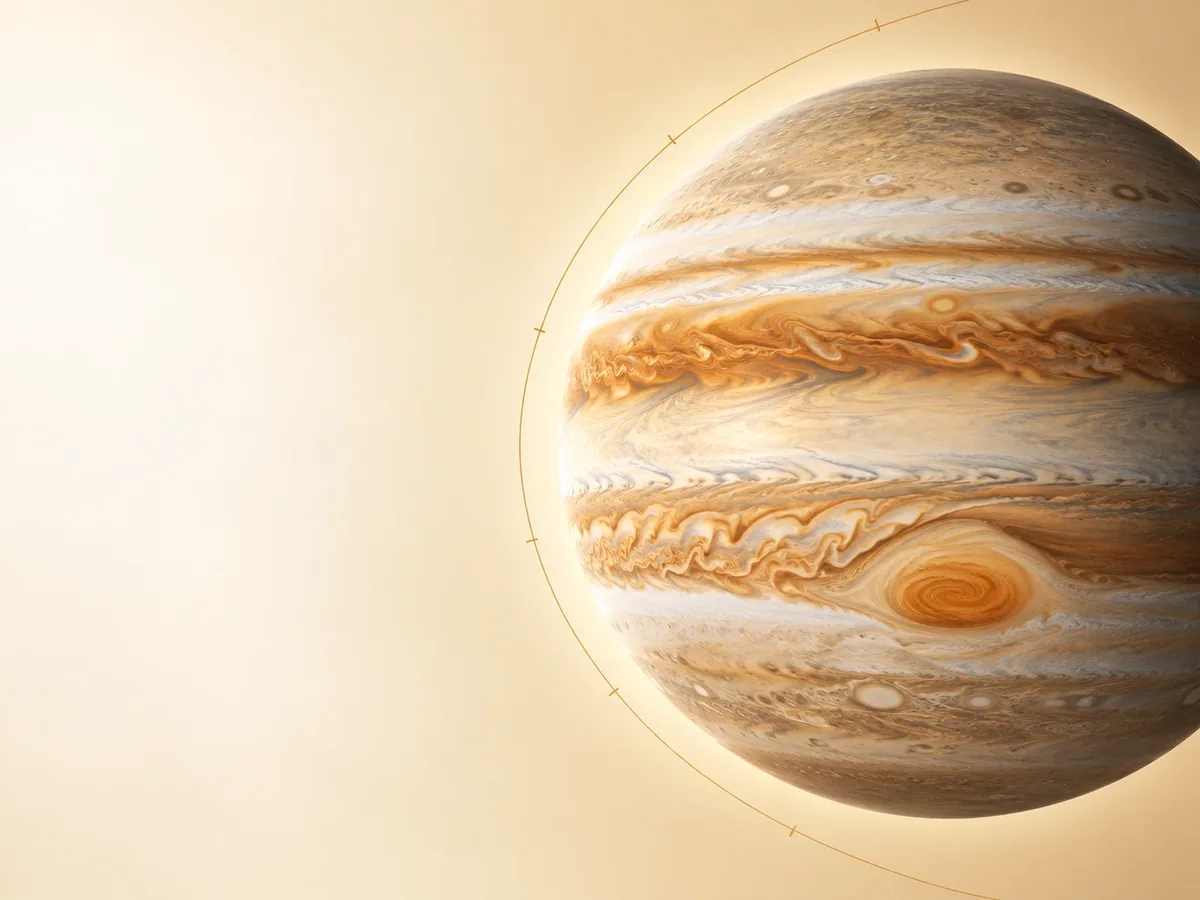

Every morning the sun rises in the east. The Moon grows from a thin crescent to full and back again in about twenty-nine and a half days. The monsoon arrives, the rivers rise, the harvest ripens, the cold season comes and goes. None of this needs our permission, and all of it keeps time. The poets of the Rig Veda, three thousand years ago and more, had a word for this dependable order underneath things: ṛtam (ऋतम्).
A word older than most
Ṛtam comes from a root meaning “to go” or “to move in a fitting way”. It is related to words in other old languages for order, art and rightness, and it carries all of those senses at once. Ṛtam is the way things properly go: the path of the sun across the sky, the turning of the seasons, the regular return of the dawn. The Vedic hymns call the gods guardians of ṛtam, and speak of the “path of ṛtam” (ṛtasya panthāḥ) along which the dawn and the rivers travel.
One of the best-known verses on it comes near the end of the Rig Veda, in a short hymn about the creation of the world:
ऋतं च सत्यं चाभीद्धात्तपसोऽध्यजायत।Order and truth were born of kindled fervour.Rig Veda 10.190.1
Here ṛtam stands beside satya, truth, as one of the very first things to exist. Before there was night and day, before the ocean and the year, there was order and there was truth. The verse goes on to describe the year, day and night, the sun and moon arranged by the creator “as before”. Order is not added to the world later. It is how the world begins.
Order you can live by
Ṛtam was never only a description of the sky. The same order that moves the sun was understood to run through human life: through the right performance of a ritual, through keeping one's word, through living in a way that fits. To act in step with ṛtam was to act rightly. To break it, by lying or by ignoring what the moment required, was to fall out of step with the world.
Over the centuries this idea developed into the concept of dharma, the duty and right conduct proper to each person and each situation. Dharma is in many ways ṛtam brought down to human scale. Where ṛtam is the cosmic rhythm, dharma is the part of it that is yours to keep.
This is a useful way to think about time. A day is not a blank container to be filled with as much as possible. It has a shape. Some hours are better for beginning, some for finishing, some for rest. Some seasons are for sowing and some for harvest. When we act with that shape rather than against it, things tend to go more easily.
Where Jyotish comes in
Jyotish, Vedic astrology, began as the study of time for ritual. The Vedic sacrifices had to be performed at the right moment: at the new and full Moon, at the solstices, when the Moon was in a particular nakshatra. Vedanga Jyotisha, the oldest surviving text on the subject, is essentially a calendar. Its purpose was to keep human action in step with the order of the sky.
From that root grew the panchang, the five-limbed calendar of tithi, weekday, nakshatra, yoga and karana that millions of families still consult. From it, too, grew the reading of birth charts, the system of dashas or life periods, and the art of muhurat, choosing the right time to begin. All of them share one assumption: that time has qualities, and that those qualities can be read.
This is the sense in which RitamSage uses Jyotish. It is not a way of fixing a person's fate. It is a way of noticing rhythm. Your birth chart is your own place in the larger order; the sky today is where that order has moved to. Put the two side by side and you can see what kind of day you are walking into.
Why we named the app RitamSage
We wanted a name that said what the app is for. Ṛtam is the rhythm: the true order of things, larger than any of us, that keeps the sun rising and the seasons turning. Sage is the calm voice that reads it for you, explains what it sees and leaves the decision to you.
The app's mark is Tumburu, the horse-headed gandharva musician who sings before the gods with his tanpura. We chose him because rhythm is musical before it is anything else. A good musician does not fight the tala; they find it and play within it, and that is where the freedom is. That is what we hope RitamSage helps you do with your days.
What living with ṛtam looks like
In practice, living in step with ṛtam is quite ordinary. It looks like this:
- Starting important work on a day that supports it, and leaving room on the days that do not.
- Resting without guilt when the rhythm is low.
- Choosing a good window for a wedding, a move or a new venture, as families have always done.
- Keeping small daily practices, a lamp, a prayer, some music, that mark the turning of the day.
- Keeping your word, which the Vedic poets would have called the human part of ṛtam.
None of this requires fear. The order of the world is not against you; you are part of it. A quiet day is not a punishment, any more than night is a punishment for the day. It is simply the next beat.
That is the idea behind everything RitamSage does: a rhythm, not a verdict.