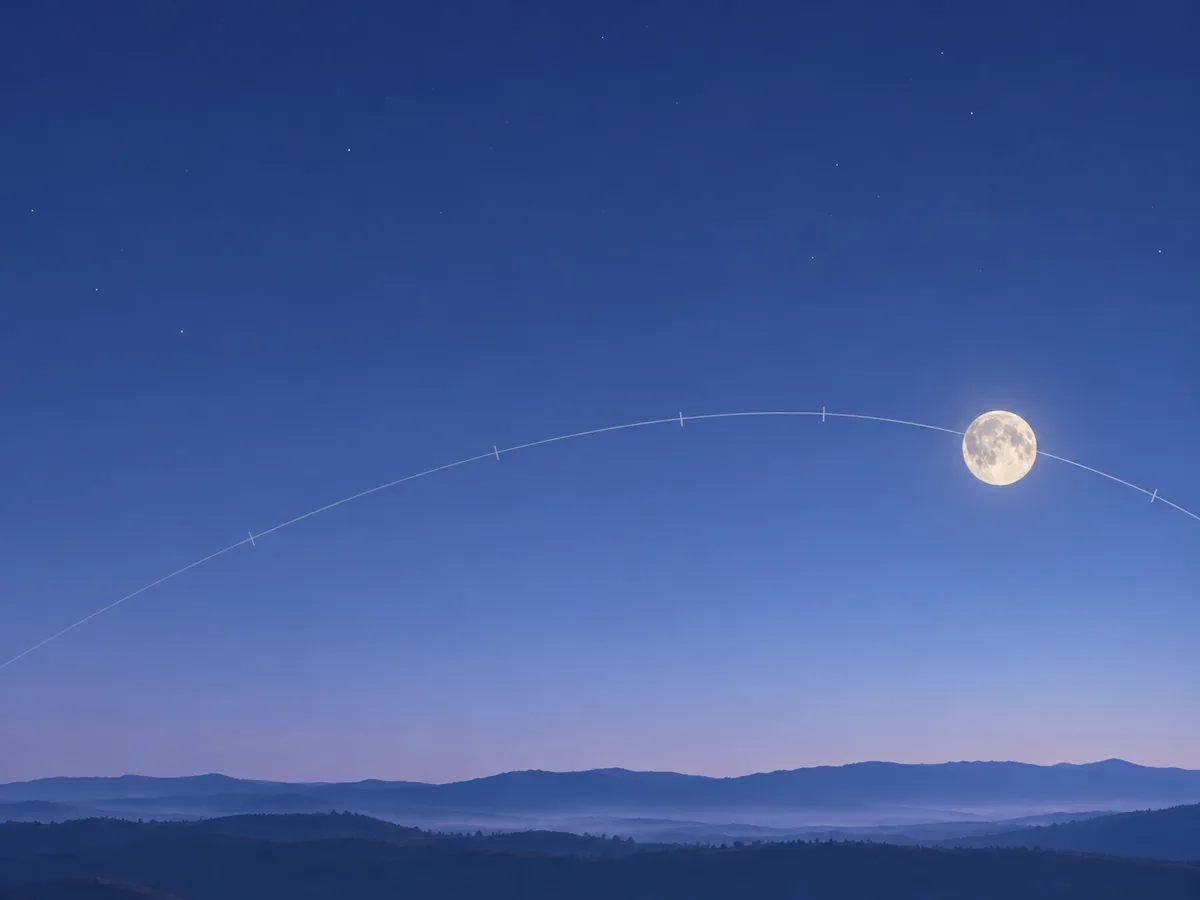

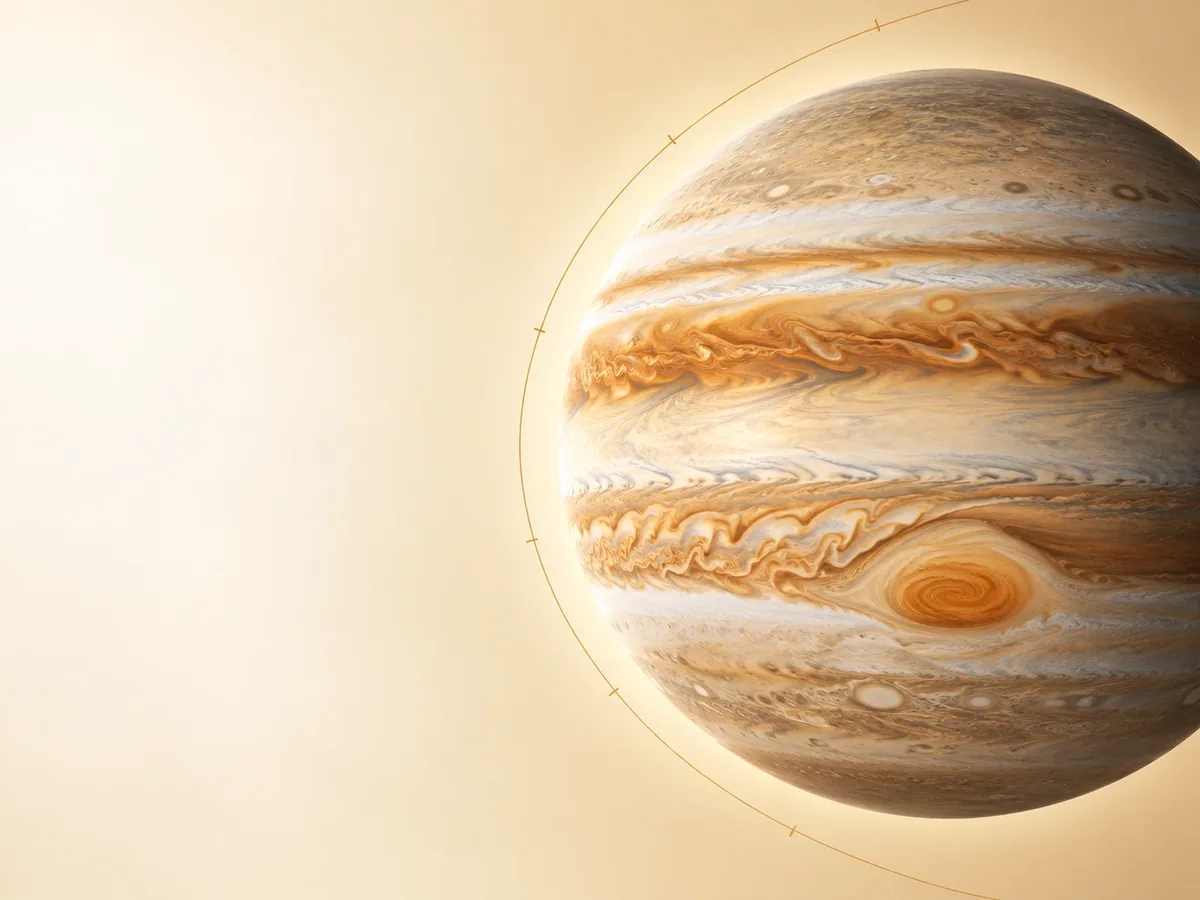
In English we say “planets”. In Jyotish the word is graha (ग्रह), and it means something rather different. A graha is “one who seizes” or “grasps”: a force that takes hold of a part of life and gives it its colour. The idea is not that distant rocks push us about, but that each graha names a recognisable quality of experience, and that these qualities rise and fall in a way that can be read from the sky.
There are nine grahas, the navagraha. Only five of them are planets in the modern sense. The list also includes the two great lights and two points in space that have no body at all. Understanding why tells you a good deal about how Jyotish thinks.
The nine
- Surya, the Sun: the soul, the father, authority and purpose.
- Chandra, the Moon: the mind, the mother, feeling and home.
- Mangala, Mars: courage, energy, siblings and land.
- Budha, Mercury: intellect, speech, trade and learning.
- Guru (Brihaspati), Jupiter: wisdom, teachers, children and grace.
- Shukra, Venus: love, beauty, comfort and the arts.
- Shani, Saturn: time, discipline, work and endurance.
- Rahu, the north lunar node: ambition, appetite and the unfamiliar.
- Ketu, the south lunar node: detachment, insight and liberation.
Uranus, Neptune and Pluto, which cannot be seen with the naked eye, have no place in classical Jyotish. The system was built on what could be watched.
The two lights
The Sun and the Moon are counted as grahas because, from the earth, they are the two great movers of time. The Sun makes the day and the year; the Moon makes the month and, through the tithi and nakshatra, the character of each day. In a birth chart the Sun stands for the atma, the soul or self, and the Moon for the manas, the mind. Most of Jyotish's daily practice, from the panchang to the dashas, is built on the Moon.
The two shadows
Rahu and Ketu are the lunar nodes: the two points where the Moon's path crosses the Sun's. Eclipses happen only when the Sun and Moon are near these points, and in the Puranic story they are the head and body of the asura Svarbhanu, who swallows the lights. They are called chhaya grahas, shadow planets. They have no sign of their own in the classical texts, and they always move backwards through the zodiac, exactly opposite each other.
Rahu stands for hunger and the new, Ketu for release and what is already known. Between them they describe the pull between wanting more and letting go, which most people will recognise.
Benefic and malefic
Classical Jyotish divides the grahas into natural benefics and natural malefics. Jupiter and Venus are benefics, along with a waxing Moon and Mercury when it is alone or with benefics. The Sun, Mars, Saturn, Rahu and Ketu are malefics. This sounds alarming until you understand what it means. A malefic is a graha whose influence is hot, dry, separating or restricting. Mars gives courage by being sharp; Saturn gives endurance by being slow. Malefics are often what make a person capable.
In any case, a graha's natural nature is only the start. Its sign, house, strength and the planets with it matter much more in a real chart. A well-placed Saturn can be the best thing in a chart; a weakened Jupiter may struggle to help.
How the grahas work
A graha does not act alone. In a chart it always works through four things.
Signs (rashis). The zodiac is divided into twelve signs of 30° each. Each sign is ruled by a graha, and each graha has signs where it is especially comfortable. A graha is exalted in one sign, where it gives its best, and debilitated in the opposite sign, where it struggles. The Sun is exalted in Aries and debilitated in Libra; Jupiter is exalted in Cancer and debilitated in Capricorn. A graha in its own sign or its moolatrikona is steady and reliable.
Houses (bhavas). The houses are the twelve areas of life, counted from the ascendant, the sign rising in the east at birth. The first is the self, the fourth home and mother, the seventh partnership, the tenth career, and so on. The house a graha sits in shows where its energy goes. The houses it rules show what it is responsible for.
Nakshatras. The zodiac is also divided into 27 lunar mansions of 13°20′, each ruled by one of the nine grahas in a repeating order. The nakshatra a planet sits in adds a finer shade to its sign, and the nakshatra of the Moon at birth is one of the most personal facts in a chart.
Dashas. Finally, grahas act in time. In the Vimshottari dasha system each graha rules a period of years: Ketu 7, Venus 20, the Sun 6, the Moon 10, Mars 7, Rahu 18, Jupiter 16, Saturn 19 and Mercury 17, in that order, a total of 120 years. Where you start depends on your Moon's nakshatra. A graha's promise in the chart tends to come forward during its own dasha. This is why a person can feel quite different in their twenties and their forties: a different graha is running the show.
Transits
As well as their positions at birth, the grahas keep moving. Their current positions, called gochara or transits, are read against the birth chart, usually counted from the Moon. The Moon's transit changes every couple of days, Jupiter's roughly every year, Saturn's every two and a half years. Saturn's passage over the Moon is the well-known Sade Sati. Transits describe the weather; the birth chart and dashas describe the climate.
The grahas in RitamSage
Everything in RitamSage is built on the grahas. Your daily rhythm weighs the Moon's transit, the tithi and nakshatra, and your running dasha. This moment shows the hora, the planetary hour ruled by each of the seven visible grahas in turn from sunrise. Life periods lays out your dashas. Sade Sati tracks Saturn. The planet pages and reports explain each graha in your own chart: its sign, house, nakshatra and strength.
A note on remedies
Jyotish has a long tradition of upayas, remedies: mantras, prayer, fasting, charity, and gemstones. The gentlest of these, the ones that ask for your attention and kindness rather than your money, are the ones we suggest in the app. A Saturday lamp for Saturn, help given to the elderly, a mantra on the planet's day. No remedy is required, and no reading in RitamSage depends on buying anything.
A graha shows a quality of time. What you do with that time is up to you.